Germany has become one of the most accessible destinations for Ukrainians – especially those affected by displacement – it offers stability, globally recognised degrees, and real career pathways.
This guide will cover everything you need to know, from admissions requirements to visa procedures. We have compiled all the essential information to help you make a confident decision about where to study in Germany for Ukrainians.
Why Study in Germany for Ukrainian Refugees?
High-quality education with renowned universities.
Low or no tuition fees at public universities.
Strong legal support for Ukrainian refugees under temporary protection.
Dedicated counselling services and language courses tailored to Ukrainian students.
Access to the EU job market after graduation.
Strategic locations that create outstanding job opportunities in Germany.
German Education System Explained for Ukrainian Students
Understanding how the German higher education system works will help you choose the right path for you.
Types of Higher Education Institutions
| Institution Type | Focus | Degree Awarded |
| Universität (University) | Research and theoretical knowledge | Bachelor’s, Master’s, PhD |
| Fachhochschule (University of Applied Sciences) | Practical and applied learning | Bachelor’s and Master’s |
| Technische Universität (TU) | Engineering and technology | Bachelor’s, Master’s, PhD |
| Kunsthochschule | Art and Design | Bachelor’s and Master’s |
Degree Structure
- Bachelor’s Degree: Typically, 3-4 years (180-240 ECTS credits)
- Master’s Degree: 1.2 years (60 ECTS credits)
- Doctoral/PhD: 3-5 years
Semester System
German universities mainly operate on two semesters: Winter (September – February) and Summer (March – August). However, UE Germany has introduced additional intakes in January and July, offering greater flexibility.
Best Courses to Study in Germany for Ukrainian Students
Whether you’re a school leaver looking to begin your undergraduate journey or you’re seeking a master’s in Germany for Ukrainian students. Here are some popular options.
- Engineering & Technology: Computer Science, Mechanical, Electrical, Civil
- Business & Management: MBA, International Business, Finance
- Health & Life Sciences: Biotechnology, Nursing, Public Health
- Art & Humanities: Language studies, International Relations, Communication Design, Illustration
- IT & AI: Data Science, AI, Software Engineering, UX/UI Design
Admission Requirements to Study in Germany for Ukrainian Students
Requirements vary by institution and programme, but the following provide a reliable general framework.
- Academic Transcripts: School-leaving certificate (undergraduate) or bachelor’s degree (master’s)
- Language Proficiency: IELTS/TOEFL for English programmes
- Statement of Purpose (SOP): Explaining academic and career goals
- Letters of Recommendation: Usually 2 required
- CV: To outline education, skills, and relevant experience (usually required for a master’s)
- Entrance Exams: Some programmes may require GRE/GMAT
Cost of Studying in Germany for Ukrainian Students
| Institution Type | Annual Tuition Fees |
| Public Universities | €0 – €500 per semester |
| Private Universities | €5,000 – €20,000 per year |
| MBA Programmes (Private) | €13,000 – €35,000 per year, depending on the institution |
Cost of Living in Germany for Ukrainian Students
The cost of living in Germany for Ukrainian students varies depending on the city. Many Ukrainian students also benefit from financial assistance through BAMF (Federal Office for Migration and Refugees) or state-level social support while holding temporary protection status.
- Accommodation: €250 – €600/month
- Food & Groceries: €150 – €250/month
- Transportation: €50 – €100/month
- Health Insurance: €80 – €100/month
- Leisure & Entertainment: €50 – €100
Germany Student Visa for Ukrainian Students
Germany has introduced strong legal protections, making it easier to study in Germany for Ukrainian refugees under the temporary protection status.
If you hold Temporary Protection Status (TPS)
Ukrainian nationals with TPS do not require a separate student visa, as the residence permit already allows university enrolment. You should inform your local foreigners’ registration office of your student status.
Applying from Ukraine or a third country
You will need to apply for a German National Visa (Type D) for study at the German Embassy or Consulate in your country of residence. Processing times are typically 4 – 12 weeks, so apply well in advance of your start date.
- Completed visa application form and biometric photographs
- University admission letter
- Proof of finance: approximately €11,208 per year (€934/month) held in a blocked account or a formal scholarship letter
- Valid passport
- Health insurance confirmation
- Proof of accommodation in Germany
Part-Time Jobs & Career Opportunities for Ukrainian Students in Germany
The integration of Ukrainians into the German labour market is moving at a faster pace, with Ukrainians reaching a 50% employment rate about 2.5 years earlier than other migrant groups.
Work rights during studies
- Non-EU students on a student visa can work up to 140 full days or 280 half days per year.
- Ukrainian students with TPS have full, unrestricted work rights with no limits on the hours they can work.
Part-time jobs for students
The minimum wage in Germany as of January 2026 is €13.90 an hour.
- University assistant roles
- Retail and hospitality jobs
- Tutoring and language teaching
- Internships in relevant industries
Job opportunities after graduation
Post-graduation, students can extend their stay with the 18-month Job Seeker Visa and explore job opportunities in Germany after a master’s. The average starting salary ranges from €35,000–€50,000 a year, depending on the field.
Student Accommodation in Germany for Ukrainian Students
Student Residences: The most affordable option, with the monthly rent around €250 – €450 per month. These typically include shared kitchens and bathrooms, creating a more social living environment.
Shared Flats: These cost around €400 – €700 per month and are typically shared with three or four people. Each person will have their own room with a shared living room, kitchen, and bathroom.
Private Apartments: For students who prefer complete privacy, private en-suites or one bedroom flats range from €700 – €1,200 per month. These are the most expensive, as you cover all the costs on your own.
Support of Ukrainian students
Many universities and NGOs, and local Ukrainian communities, have helped match students with temporary accommodation. Students can also seek help from the university’s international office.
Common Challenges Ukrainian Students May Face in Germany
Being well prepared for potential difficulties will help you adapt faster and make the most out of your time in Germany.
Language Barrier
Even with English-taught programmes, daily life is much easier with basic German, and reaching B1–B2 through UE Germany’s language courses can greatly improve your experience.
Bureaucracy
Navigating German bureaucracy – residence registration, health insurances, banking – can be time-consuming and confusing. Connect with the university’s international student office early for guidance.
Credential Recognition
Ukrainian academic qualifications may require validation through the anabin database or formal recognition. Allow extra time for this process.
Mental Health
Many Ukrainian students are managing trauma, separation from family and uncertainty about the future. German universities have expanded counselling services and student centres.
How to Choose the Right Course at UE Germany
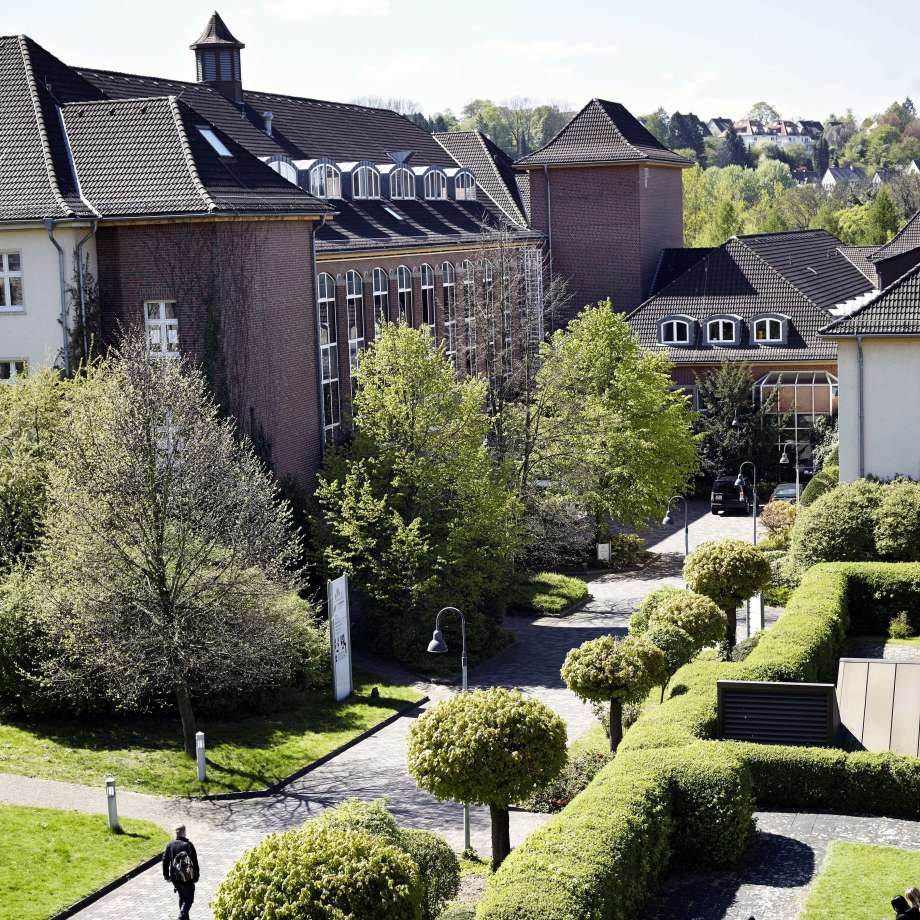
University of Europe for Applied Sciences (UE) is a private university with campuses in Berlin, Hamburg, Iserlohn, and Potsdam (UE Innovation Hub, near Berlin), offering a wide range of English-taught programmes in business, marketing, media, sports, psychology, and creative arts.
- Identify your career goals in areas like business, management, design, or technology.
- Check that your academic background meets the entry requirements.
- Consider campus location and available support services.
- Review tuition fees, scholarships, and living costs.
- Speak with the UE’s admissions team for personalised guidance
Conclusion
Germany offers one of the most practical, affordable, and opportunity-rich destinations for Ukrainian students seeking higher education in Europe. Whether you choose a public institution or a focused private institution like UE Germany, the most crucial step is starting your research and application early. The sooner you begin, the better your options will be.
FAQ's
Here are Some Other Blogs You'll Find In
Top 25 Most Asked FAQs About Studying in Germany – Explore Now!
10 Best Cities in Germany for International Students and Job Seekers
The Cost of Studying in Germany: A Guide for International Students
How to Work in Germany During or After Your Studies
How to Select the Best Master’s Programme in Germany for International Students