
Germany is not quietly watching the connected device revolution from the sidelines; it’s right at the centre of it. With Europe’s IoT market expected to grow from €179 billion in 2025 to €258 billion by 2029, the demand for graduates who genuinely understand IoT devices and smart services has never been more concrete.
So, if you are weighing up a master’s degree and wondering where to study, what you will learn, and what kind of career waits at the other end, this is the guide you need.

What Is MSc IoT Devices & Smart Services?
It is application-oriented by nature, meaning you spend time solving real problems, not just studying theory. Students graduate with a working understanding of how to implement IoT devices and build smart systems from scratch, grounded in current industry standards. Topics span data analysis, cloud computing, wireless communication, and embedded systems — all connected through the lens of practical deployment.
At the University of Europe for Applied Sciences (UE), the IoT Devices and Smart Services programme is available in 60, 90, or 120 ECTS formats across 2, 3, or 4 semesters, giving you genuine flexibility depending on your prior background and study goals.
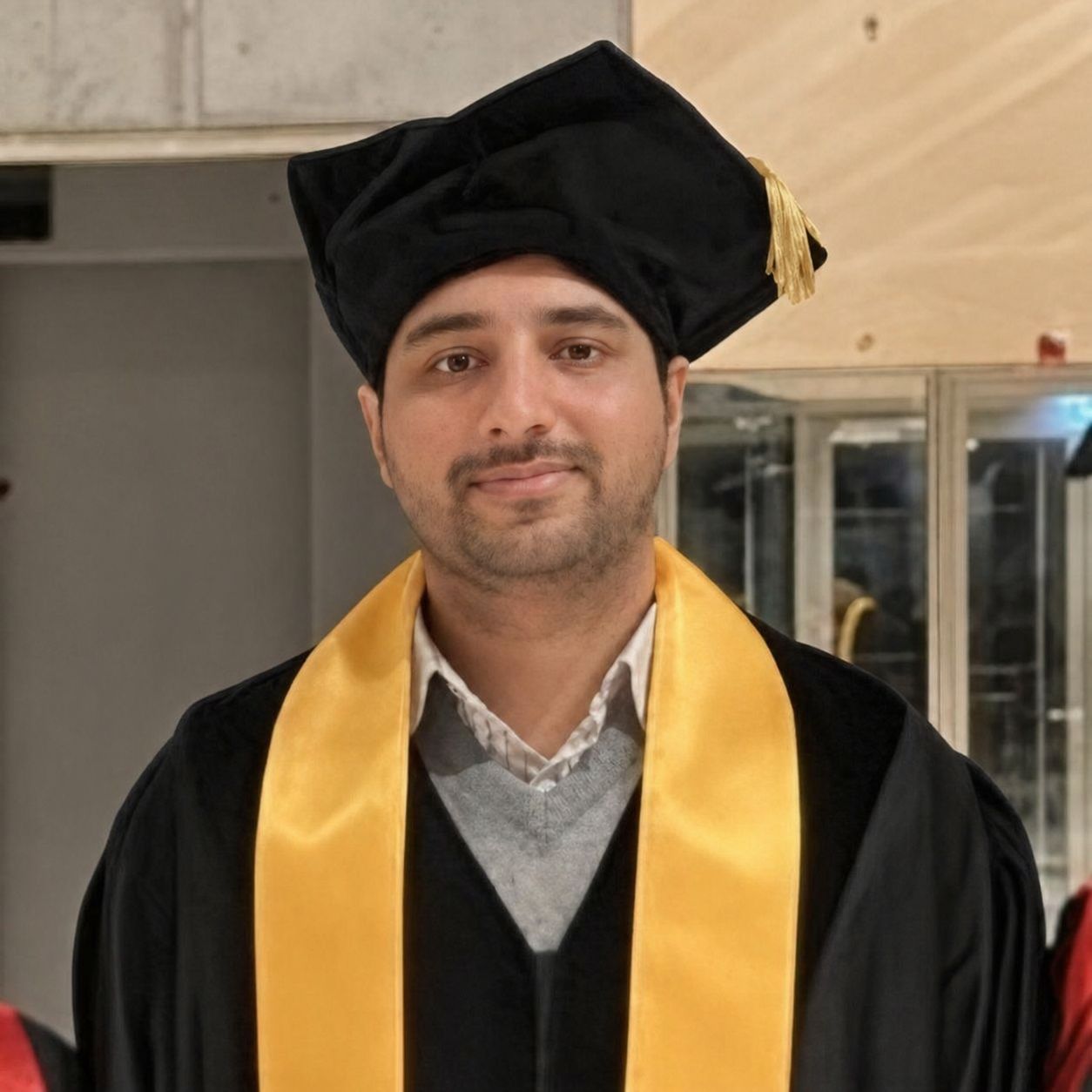
” The Internet of Things turns connected technologies into intelligent services that improve how people, businesses, and cities interact with the world ”
— Prof. Dr Talha Ali Khan, Vice President of Research & Program Leader for MSc Data Science

Why Study IoT Devices & Smart Services in Germany?
Germany is Europe's largest economy with a GDP growth of .45 trillion (2026), which includes industrial sectors that are deeply invested in IoT integration. According to Germany Trade & Invest, use cases for IoT now span manufacturing, construction, retail, and transportation, with automation driving much of the commercial value.
For international students, studying in Germany also means:
- Studying entirely in English at institutions like UE's Innovation Hub campus.
- Gaining exposure to real industrial environments and live projects.
- Building a professional network in one of Europe's largest tech job markets.
- Accessing a growing number of IoT careers in Germany that actively recruit international graduates.
Key Subjects Covered in an MSc IoT Programme
IoT subjects in a well-structured master’s programme go well beyond basic networking. At UE, the IoT curriculum is built around applied knowledge; the kind of topics employers actually look for when hiring.
Core areas include:
- IoT for Smart Services: how connected devices transform industries, with a focus on service design, user experience, and business potential.
- Communication protocols: MQTT, CoAP, HTTP, and how data flows between devices and cloud systems.
- Cloud-based service delivery: integrating IoT data into scalable platforms.
- Data security and privacy: system-level protection for connected environments.
- Embedded systems and hardware-software integration.
- Smart city, healthcare, mobility, and energy applications: real-world sectors where IoT is actively being deployed.
- Edge computing and AI integration: combining IoT data streams with machine learning to enable predictive decision-making.
Programmes are structured so that each module builds on the last, moving from foundational principles to full system design and evaluation.
Skills You Will Learn in IoT Devices & Smart Services
The IoT skills you develop during an IoT Devices & Smart Services programme are directly aligned with what tech employers in Germany need. Graduates leave with the ability to work across both the technical and strategic dimensions of connected systems.
Technical skills you will gain:
- Designing and prototyping IoT hardware and sensor networks.
- Building and deploying cloud-integrated smart services.
- Working with communication protocols and wireless networks.
- Applying data analysis and ML to IoT data streams.
- Ensuring data security, GDPR compliance, and system integrity.
Professional and strategic skills:
- Translating business requirements into technical IoT solutions.
- Managing the full lifecycle of a connected product; from concept to deployment.
- Understanding user-centred design in smart service contexts.
- Evaluating and presenting IoT system performance to non-technical stakeholders.
These are not abstract competencies. They directly reflect the skills required for IoT careers across Germany’s industrial, automotive and tech sectors.
Eligibility Requirements for International Students
MSc IoT eligibility in Germany is designed to be accessible to graduates from a range of technical backgrounds. Here is what you will typically need:
- A completed bachelor’s degree (in a relevant technical or engineering field).
- Good English language proficiency, at least B2 level.
- Basic statistical knowledge.
- A completed admission form, CV and copy of passport.
The IoT admission requirements are not unusually restrictive, but they do assume a solid technical foundation. If your undergraduate degree was in computer science, electrical engineering, telecommunications or a related field, you are likely well-positioned to apply.
International students from non-EU countries should also factor in visa processing timelines. UE’s application deadlines vary by semester, so checking the UE admissions page early is worth doing.
Duration and Cost of Studying MSc IoT in Germany
The cost of studying IoT in Germany at a private university like UE is transparent. The MSc IoT Devices & Smart Services programme starts from €12,550 per year, with student advisers available to discuss available savings and financial support options.
Programme lengths at UE are flexible:
- 60 ECTS: a shorter, accelerated route for those with relevant prior learning.
- 90 ECTS: a mid-length option across 3 semesters.
- 120 ECTS: the full two-year master’s for a more in-depth study experience.
When comparing IoT tuition fees in Germany, it is worth considering what you get in return: industry-connected faculty, applied project work, an English-taught environment and access to one of the most active IoT job markets in Europe. For many international students, it represents strong value against the career outcomes on the other side.
Career Scope After MSc IoT Devices & Smart Services in Germany
Career opportunities after an MSc in IoT are wide. Germany’s industrial and tech landscape means there is demand not just in traditional engineering roles but across sectors that are actively embedding connected technologies into their operations.
Industries actively hiring IoT professionals in Germany include:
- Automotive: BMW, Volkswagen, Bosch, and Continental are all investing heavily in connected vehicle systems.
- Manufacturing and logistics: Industry 4.0 deployments across supply chains require IoT specialists.
- Healthcare technology: smart monitoring, wearables and hospital infrastructure.
- Energy and utilities: smart grid management and energy consumption monitoring.
- Smart cities and public infrastructure: urban mobility, waste management and environmental sensing.
Highest-Paying IoT Job Roles in Germany
Salary data for IoT jobs in Germany shows consistently strong earning potential, especially for those with a master’s degree and practical deployment experience.
According to SalaryExpert (2026), the average gross salary for an IoT engineer in Germany is approximately €100, 890 per year, with senior specialists earning up to €114.231. Entry-level roles for those with 1–3 years of experience average around €71.538.
Highest-paying IoT roles in Germany typically include:
- IoT Solutions Architect: designing end-to-end connected systems for enterprise clients
- Embedded Systems Engineer: developing firmware and hardware integration for IoT devices
- IoT Security Specialist: protecting connected infrastructure from vulnerabilities
- Smart Systems Engineer: deploying IoT solutions in industrial and urban environments
- IoT Data Engineer: managing pipelines between connected devices and analytics platforms
- Product Manager (IoT): leading connected product development from concept to market
Senior IoT professionals with specialist skills, particularly in AI integration, industrial automation or cybersecurity, can earn towards the higher end of this range and beyond.
“Innovation distinguishes between a leader and a follower.”
— Steve Jobs
Job Opportunities After Studying IoT in Germany
The IoT industry in Germany is hiring across functions, and an MSc gives you the kind of depth employers specifically look for. Beyond pure engineering roles, IoT jobs for international students in Germany increasingly include hybrid positions that combine technical expertise with business strategy.
Roles graduates typically move into include:
- IoT Solutions Consultant
- Connected Product Developer
- Smart Infrastructure Engineer
- Cloud IoT Architect
- Industrial Automation Specialist
- Research and Development Engineer
Germany’s new Skilled Immigration Act also makes it more straightforward for international graduates to remain and work in Germany after completing their studies, which is a practical consideration worth factoring into your decision.
IoT vs AI vs Data Science: Which Career Has Better Scope?
This is one of the most common questions prospective students ask, and the honest answer is that it is not really a competition.
IoT vs data science is not a binary choice. IoT generates the data; data science makes sense of it. In Germany’s industrial environment, the two are deeply intertwined. As Industry 4.0 expands, the demand for professionals who can sit at the intersection of connected hardware and data analysis is growing fast.
Here is a straightforward comparison:
| Area | Focus | Typical Starting Salary (Germany) | Key Industries |
| IoT Engineering | Connected systems, devices, smart services | €71.538 | Automotive, manufacturing, smart cities |
| Data Science | Statistical analysis, ML models, data pipelines | €50,323 | Finance, healthcare, tech |
| AI Engineering | Machine learning, deep learning, model deployment | €55,000 to €70,000 | All major sectors |
The AI and IoT career scope are particularly strong when combined. Professionals who understand both connected device architectures and machine learning workflows are among the most sought-after in Germany right now.
Conclusion: Study MSc IoT Devices & Smart Services at UE Germany
Germany’s connected technology sector is not speculative; it is one of the most active and well-funded in Europe. The professionals who will lead that sector are the ones being trained right now, in programmes that combine genuine technical depth with real-world application.
The MSc IoT Devices & Smart Services at the University of Europe for Applied Sciences is created specifically for that purpose. It gives you the technical skills, strategic thinking and German industry exposure to compete for the roles that matter; whether that is in automotive engineering, smart infrastructure, healthcare technology or something else.