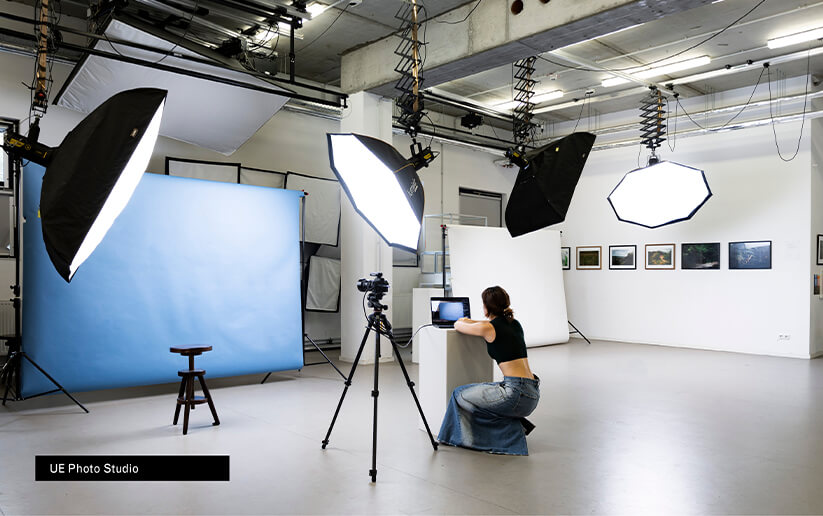
Let’s be honest: the world of photography isn’t what it used to be. Gone are the days of dusty darkrooms and negatives drying on a string. Today, photography lives in pixels, edits happen on screens, and your portfolio might reach more people on Instagram than in any gallery. For budding photographers in a digital-first world, learning on the job might not cut it.
That’s where a BA in Photography comes in. More than a degree, this programme offers you a creative toolkit, a career launchpad, and an industry translator, all rolled into one.
So, what are the real benefits of studying a bachelor’s in photography – and how exactly can a degree like UE’s BA Photography & New Media programme help you succeed in digital photography? Let’s take a closer look through the lens.
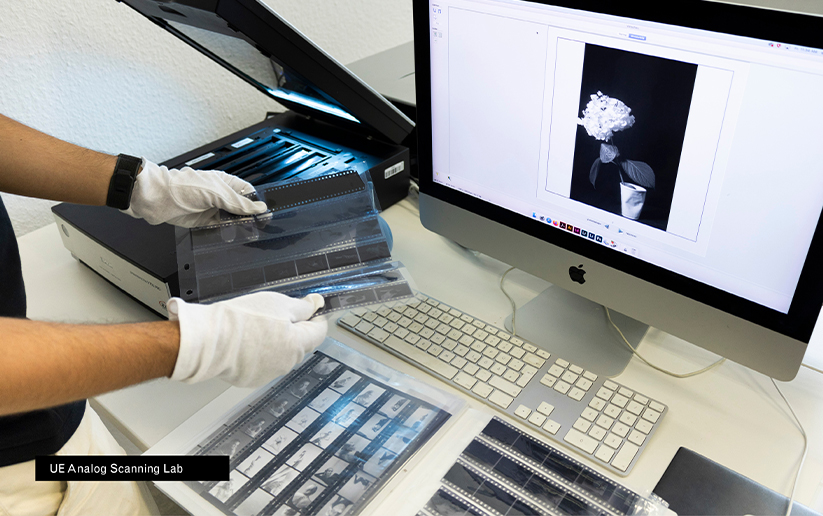
Zooming In: What Actually Is a BA in Photography?
At UE, it means something specific: you’re trained as a thinker and a maker. That training includes everything from composition and lighting to ethics, editing, curation, publishing, and entrepreneurship. You won't just study photography – you'll study what it means to be a photographer in a rapidly evolving world.
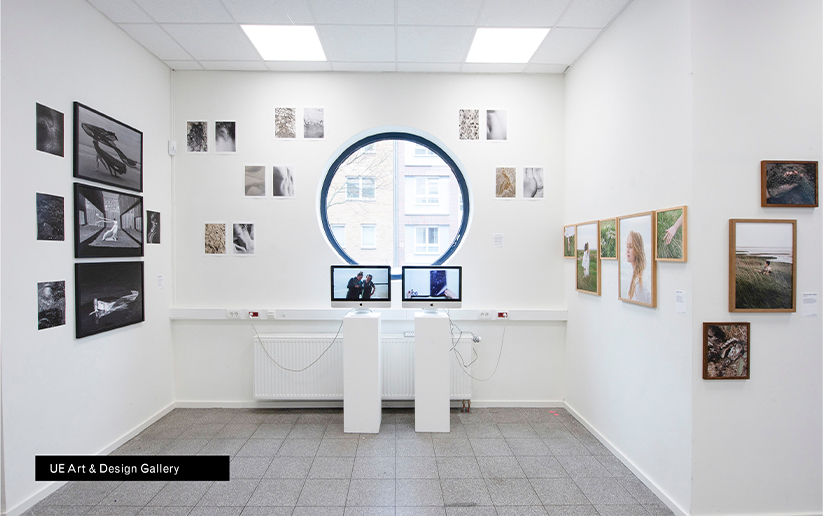
Pixels Over Prints: What Does Digital Photography Really Involve?
In a BA Photography programme, digital photography includes learning how to operate high-end DSLRs and mirrorless cameras, sure. But it also means diving deep into editing suites like Adobe Photoshop and Lightroom. You'll explore colour correction, retouching, visual effects, AI filters, and augmented reality integration. You might experiment with drone photography, 3D scanning, or creating entire photographic environments in VR. And crucially, you'll learn how to think critically about what you're shooting and why it matters in a digital context.
Five Perks You Probably Didn’t Expect from Studying BA Photography
So, let’s get specific. What are the top five benefits of studying a BA Photography to succeed in digital photography?
- Technical Mastery, Minus the Guesswork – You’ll graduate knowing your camera inside out. That means full creative control, not crossing your fingers and hoping the settings work.
- Digital Fluency – Editing tools, online platforms, metadata, file formats, web optimisation, and digital rights management – you’ll speak the language fluently.
- Conceptual Confidence – Anyone can snap a nice sunset. You’ll learn how to build compelling, thoughtful series with narrative depth and personal voice.
- Professional Practice – From writing pitches to exhibiting work and negotiating with clients, you’ll be equipped for the realities of creative industries.
- Creative Community – You’re not learning in a vacuum. You’ll collaborate with other artists, designers, and media-makers, forming networks that matter.
In other words, think of this as your gateway to the kinds of photography career opportunities that don’t show up by accident.
Tools of the Trade: Core Skills You Learn from a Digital Photography Degree
A solid BA Photography degree leaves you with more than a camera bag full of gear. It sharpens your thinking, broadens your perspective, and, yes, boosts your employability.
Here are some core skills you can expect to gain:
- Technical: Manual camera control, studio lighting, advanced editing, digital workflow management.
- Creative: Visual storytelling, photo essays, experimental formats, personal project development.
- Analytical: Visual theory, image analysis, critical reflection, cultural and ethical considerations.
- Professional: Portfolio building, client communication, branding, project pitching.
Whether you’re freelancing, exhibiting, interning or launching your own digital studio, these skills travel with you.
Why Study Photography at All?
There’s a myth that being a “digital native” means you’re already good at digital photography. But knowing how to use Instagram doesn’t mean you know how to craft a compelling visual narrative. True, most of us have a pretty decent camera in our pockets pretty much all the time nowadays, but using it to the full is another thing entirely. That’s where the benefits of formal photography education come in.
A degree grounds you in principles, pushes you to evolve creatively, and helps you avoid dead ends by giving you structure and purpose. It forces you to experiment, reflect, and articulate your practice. The importance of photography education goes beyond taking photos to understanding what images do out in the world – how they function in politics, media, advertising, activism, art. A BA in Photography helps you stop reacting and start creating with intent.
Flash Forward: How a BA Photography Can Launch Your Digital Career
Digital photography is everywhere, and that really isn’t hyperbole. Think about it for a second: it’s in fashion campaigns, newsrooms, product catalogues, street exhibitions, protest movements, your friend’s side hustle, and probably half your social feed. Which means a career in digital photography could take any number of directions – fast-paced agency life, slow, thoughtful editorial, freelance chaos, or a startup that doesn’t exist yet.
A BA in Photography teaches you how to think like a photographer and act like a professional. You’ll learn how the industry moves, how to pitch yourself, how to read a brief and still make it your own.
And the gear? The platforms? The trends? They’ll change. Your value won’t. Because the advantages of a BA in Photography lie in what the course pulls out of you, not what it hands over – your voice, your questions, your visual instincts. That’s what clients remember. That’s what gets you hired.
Ready to Focus Your Future?
If you’re serious about turning your creative passion into a sustainable digital career, it’s time to take the next step. The BA Photography & New Media programme at the University of Europe for Applied Sciences offers the space, tools, and expert mentorship you need to develop as an image-maker for the 21st century.
Explore the programme here and start building the future you want to see.