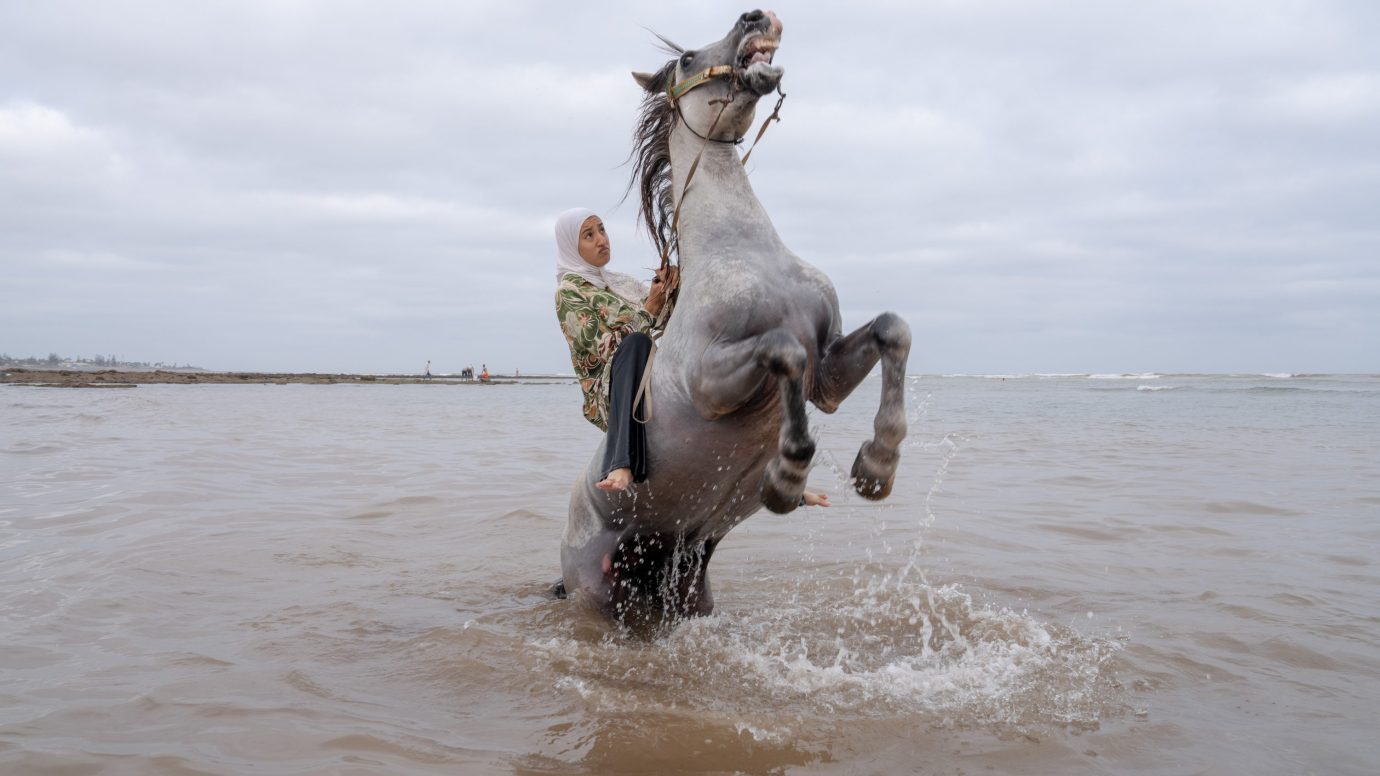
The University of Europe for Applied Sciences (UE) proudly celebrates the outstanding achievement of its alumna Chantal Pinzi, who has been awarded a World Press Photo 2026 Award—the most prestigious and internationally recognised honour in the field of photojournalism.
Pinzi, who graduated in 2020 from the BA Photography & New Media programme at UE Berlin, received the award for her compelling photo essay “Farīsāt: Gunpowder’s Daughters.” The project explores the evolving role of women within Morocco’s historic Tbourida tradition, a ceremonial equestrian performance deeply rooted in the country’s cultural heritage. Traditionally dominated by male riders, this space is now being reclaimed by women, whose stories Pinzi captures with striking sensitivity and visual strength.
Through her lens, Farīsāt not only documents a cultural practice but also sheds light on broader themes of empowerment, identity, and resilience. The work offers a nuanced perspective on how tradition and modernity intersect, highlighting the determination of women who challenge long-standing social norms while preserving elements of their heritage.
Since completing her studies at UE, Pinzi has established herself as a distinctive voice in contemporary photography. Her work consistently focuses on marginalized communities, with a particular emphasis on narratives shaped by women. By combining documentary storytelling with a deeply human approach, she creates visual essays that resonate across cultural and geographic boundaries.
The World Press Photo Awards are widely regarded as the benchmark for excellence in visual journalism, recognising photographers who not only demonstrate technical mastery but also contribute meaningful, impactful stories to global audiences. Pinzi’s recognition places her among the most influential visual storytellers of her generation and marks a significant milestone in her professional journey.
“We are incredibly proud of Chantal Pinzi’s outstanding achievement and her artistic development since graduation,” said Professor Michael Danner, Head of the BA Photography & New Media program and her supervisor at UE. “Her success reflects not only her talent and dedication, but also the values we foster at UE; creativity, critical thinking, and meaningful storytelling.”
Her success also reflects the strong foundation built during her time at UE, where she developed both her artistic practice and her critical engagement with socially relevant topics. The BA Photography & New Media programme encourages students to explore innovative forms of visual communication while addressing contemporary issues, an approach clearly evident in Pinzi’s award-winning work.
For the University of Europe for Applied Sciences, this achievement highlights the impact of its alumni on the international stage and reinforces its commitment to nurturing creative talent that engages with the world in meaningful ways.
Chantal Pinzi’s work continues to gain global recognition and stands as an inspiring example for current and future students pursuing careers in photography and visual storytelling.
Explore more of her work:
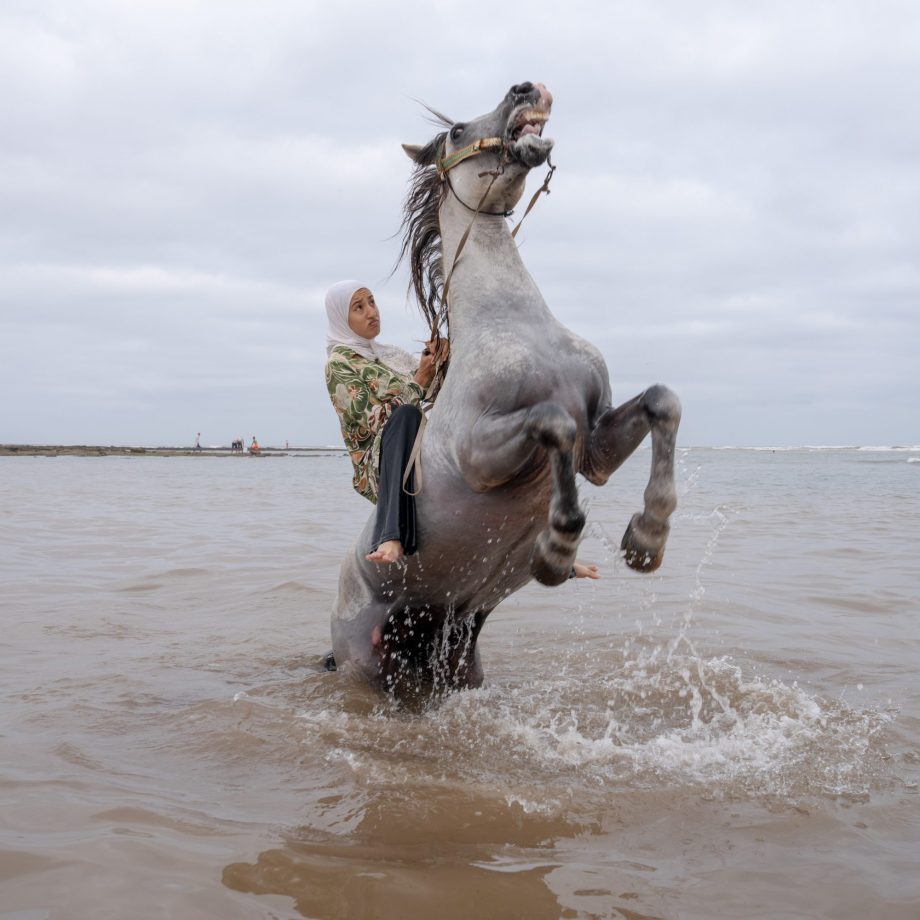
Title: Farīsāt: Gunpowder’s Daughters Credit: © Chantal Pinzi, Panos Pictures Caption: Ghita Jhiate manages her unruly stallion. Long forbidden by her father to participate in Tbourida, she finally realized her dream of riding alongside pioneer Zahia Aboulait in 2025. Sidi Rahal, Morocco, 6 August 2025. Story: Tbourida is a UNESCO-recognized Moroccan equestrian tradition dating back to the 16th century. Troupes gallop in unison, firing rifles in a choreographed performance of cavalry warfare. Historically excluded, female riders have fought for inclusion since Morocco’s 2004 family code reforms strengthened women’s legal rights. Today, seven all-female troupes now ride among some 300. These farīsāt (horsewomen) bear significant personal costs, funding their own horses, costumes, and gunpowder permits. Their perseverance stands as a powerful claim to women’s rightful place in Moroccan cultural heritage. 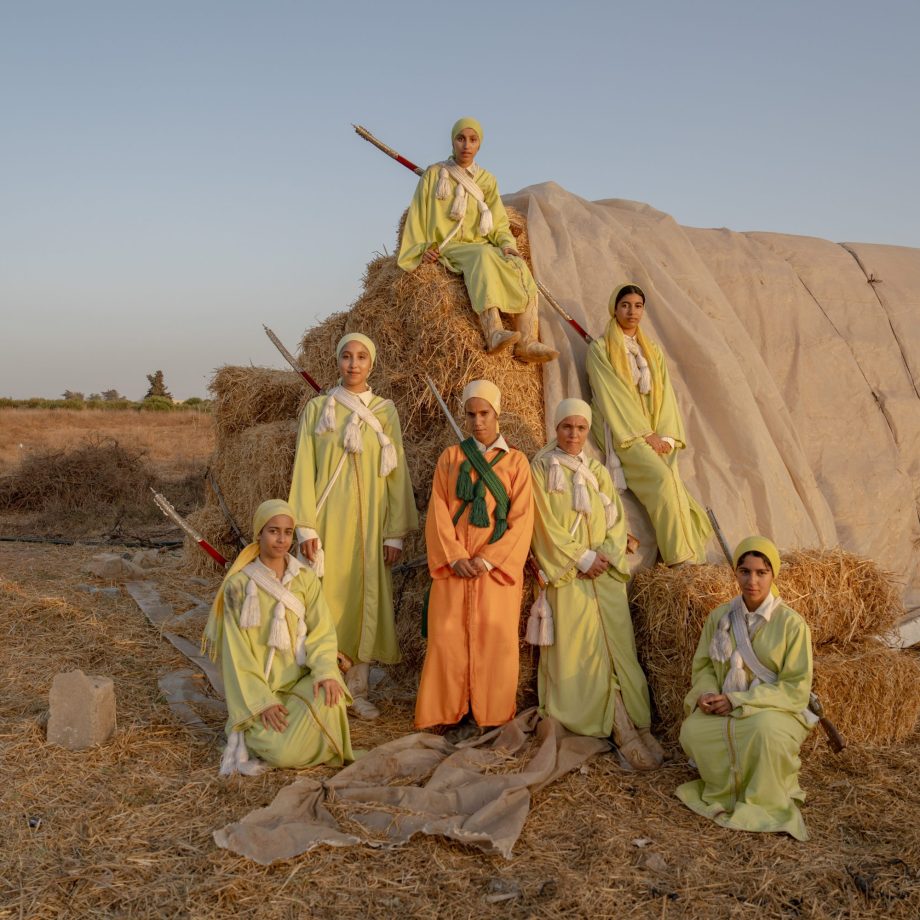
Title: Farīsāt: Gunpowder’s Daughters Credit: © Chantal Pinzi, Panos Pictures Caption: A portrait of Bouchra Nabata’s troupe. Her determination as one of Tbourida’s first female riders helped pave the way for the seven all-female troupes that exist today. Rabat, Morocco, 13 August 2025. Story: Tbourida is a UNESCO-recognized Moroccan equestrian tradition dating back to the 16th century. Troupes gallop in unison, firing rifles in a choreographed performance of cavalry warfare. Historically excluded, female riders have fought for inclusion since Morocco’s 2004 family code reforms strengthened women’s legal rights. Today, seven all-female troupes now ride among some 300. These farīsāt (horsewomen) bear significant personal costs, funding their own horses, costumes, and gunpowder permits. Their perseverance stands as a powerful claim to women’s rightful place in Moroccan cultural heritage. 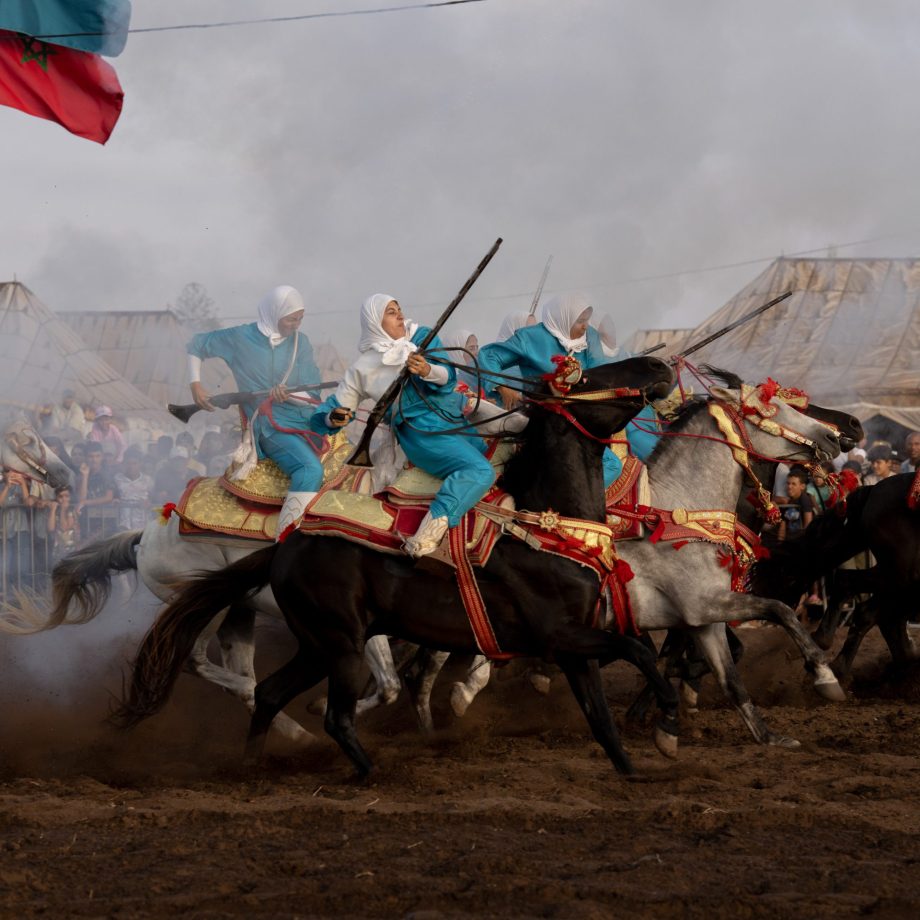
Title: Farīsāt: Gunpowder’s Daughters Credit: © Chantal Pinzi, Panos Pictures Caption: Noura attempts to control her horse after firing, the most dangerous part of the performance. Riders risk injury from gunpowder or falling and being trampled. Sidi Rahal, Morocco, 8 August 2025. Story: Tbourida is a UNESCO-recognized Moroccan equestrian tradition dating back to the 16th century. Troupes gallop in unison, firing rifles in a choreographed performance of cavalry warfare. Historically excluded, female riders have fought for inclusion since Morocco’s 2004 family code reforms strengthened women’s legal rights. Today, seven all-female troupes now ride among some 300. These farīsāt (horsewomen) bear significant personal costs, funding their own horses, costumes, and gunpowder permits. Their perseverance stands as a powerful claim to women’s rightful place in Moroccan cultural heritage. 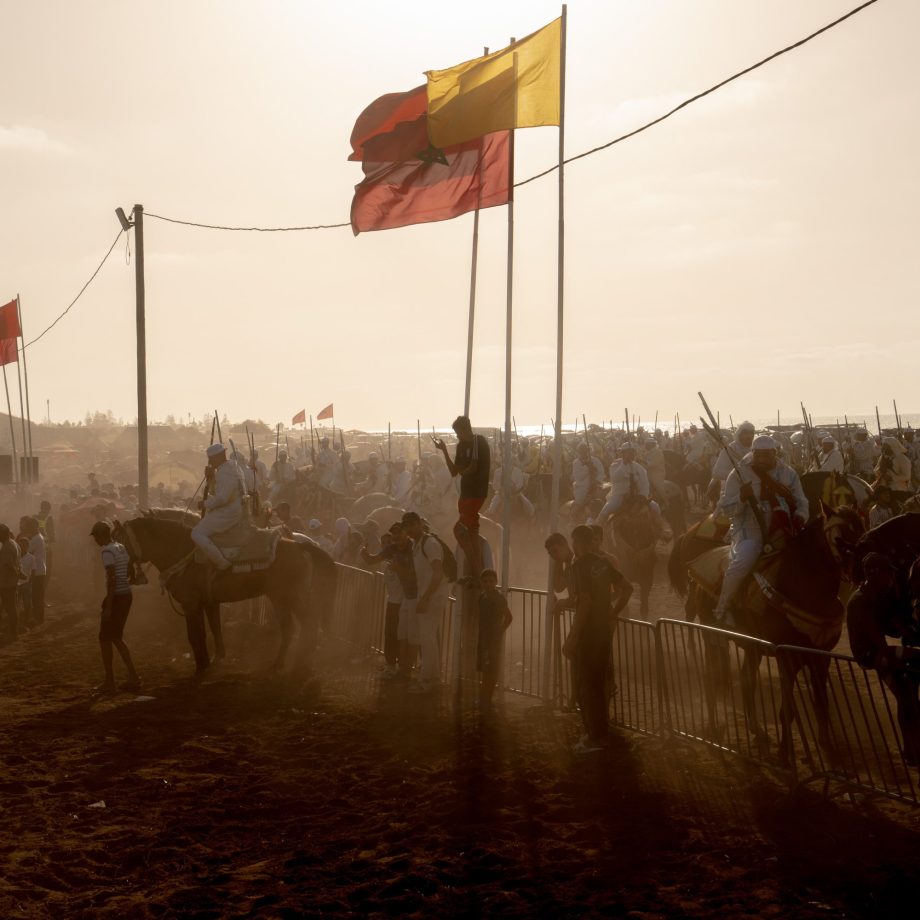
Title: Farīsāt: Gunpowder’s Daughters Credit: © Chantal Pinzi, Panos Pictures Caption: A Tbourida festival where only one of the performing troupes was made up of women. Sidi Rahal, Morocco, 8 August 2025. Story: Tbourida is a UNESCO-recognized Moroccan equestrian tradition dating back to the 16th century. Troupes gallop in unison, firing rifles in a choreographed performance of cavalry warfare. Historically excluded, female riders have fought for inclusion since Morocco’s 2004 family code reforms strengthened women’s legal rights. Today, seven all-female troupes now ride among some 300. These farīsāt (horsewomen) bear significant personal costs, funding their own horses, costumes, and gunpowder permits. Their perseverance stands as a powerful claim to women’s rightful place in Moroccan cultural heritage.