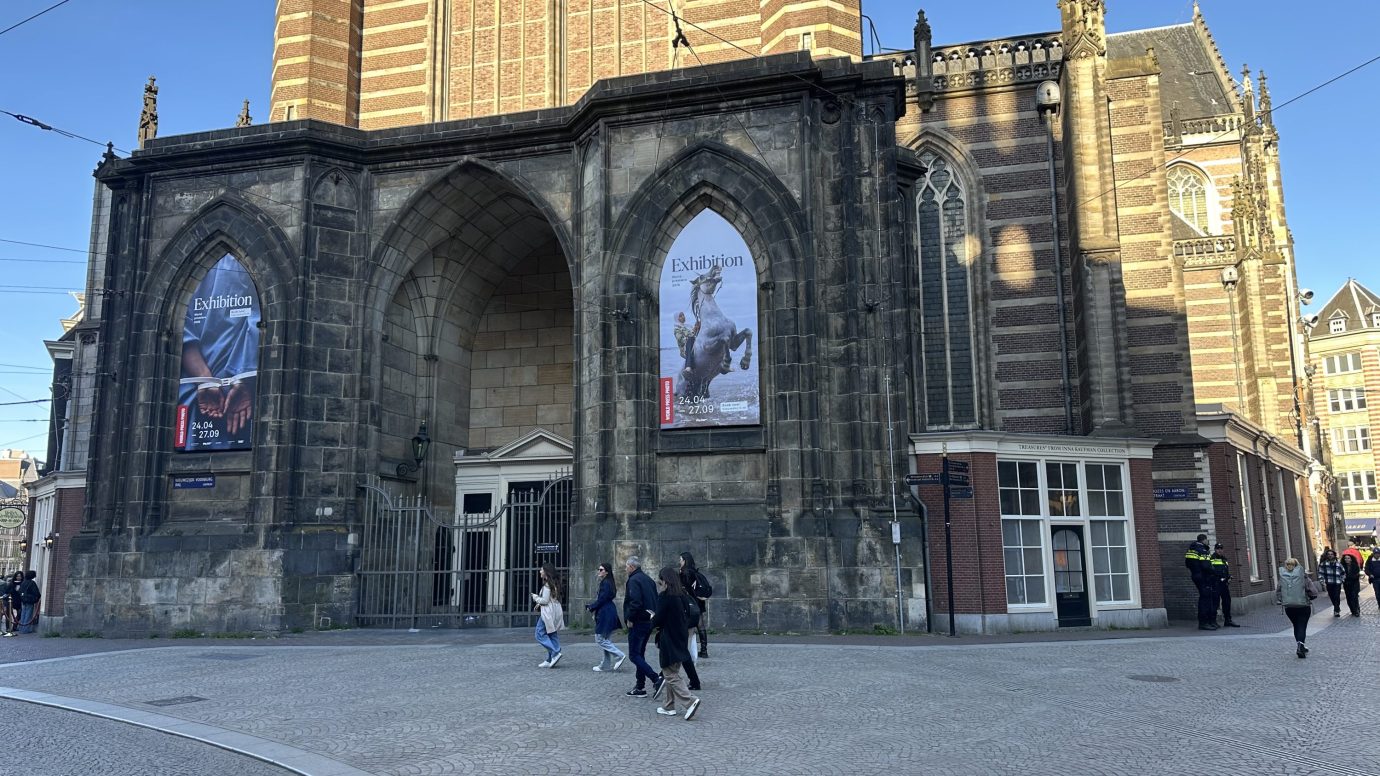
- University of Europe for Applied Sciences analyzes museum prices in 16 German state capitals and 26 European capitals
- Adults pay an average of €8.26 in German cities – compared to €11.97 across Europe
- Discounted tickets are around 50 percent more expensive on average in Europe than in Germany
Berlin, 30 April 2026 – How much does cultural participation cost, and who can afford it? These questions are central when it comes to education, creativity, and societal development. A recent analysis by the University of Europe for Applied Sciences (UE), which compared admission prices for art museums in 16 German cities with those in 26 European capitals and major cities, shows: Visiting a museum is cheaper in German state capitals than elsewhere in Europe. Adults pay an average of €8.26 for admission in Germany, while the average in European metropolitan areas is €11.97.
Prof. Johannes Kiessler, Dean of the Art & Design Department at the University of Europe, comments on the study as follows:
“Museums complement the education system and are places of encounter and identity formation. In this way, they strengthen social cohesion. Low admission prices reduce financial barriers for lower-income groups and thus promote inclusion. Cultural heritage becomes accessible not as an exclusive privilege, but as a shared public good.”
The Cost of Visiting Museums in Germany
The highest average admission prices for adults in art museums are charged in Dresden (€15.20), Berlin (€11.20), and Düsseldorf (€9.75). These are followed by cities such as Hamburg and Hanover, with average prices of €9.00 and €8.80 respectively. Visiting museums is significantly cheaper in smaller cities: in Saarbrücken, adults pay an average of just €4.25, and in Erfurt €5.20. Admission to museums in Kiel is free of charge.
For young people aged 14 to 18, access to art and education is particularly low-threshold: in eight German cities, admission for teenagers is completely free. These include major institutions such as the Alte Nationalgalerie in Berlin, the Hamburger Kunsthalle, and the Alte Pinakothek in Munich. Overall, teenagers pay an average of just €0.52 for a museum visit.
Table of the 30 most expensive museums in Germany
Large Differences in Museum Admission Prices
Museum visits are particularly expensive for adult visitors in cities such as Amsterdam (€23.19), Helsinki (€22.20), and Vienna (€20.20), followed by Rome (€16.50) and Stockholm (€15.63). At the lower end of the ranking are cities such as Nicosia, Sofia, and Bucharest, with average adult ticket prices of €3.33, €4.77, and €6.08 respectively.
Discounted ticket prices also vary widely, ranging from €16.78 in Vienna to €1.50 in Nicosia. On average, discounted tickets cost €8.11 across Europe, compared to €5.39 in Germany—making them about 50 percent more expensive in Europe. For teenagers, museum admission in European metropolitan areas averages €1.11, more than twice as high as in Germany. In ten European cities, teenagers receive free museum entry. Dublin is an exception: here, admission to museums is free for all visitors, including institutions such as the Hugh Lane Gallery, the Irish Museum of Modern Art (IMMA), and the Photo Museum Ireland.
“When experiencing art, people often respond intuitively with empathy or curiosity. This enhances their ability to put themselves in others’ shoes,” says Prof. Johannes Kiessler, Dean of the Art & Design Department at the University of Europe for Applied Sciences.
“Unlike fast-paced social media stimuli, a physical work of art often forces us to pause. This ‘slowing down’ gives the brain time to shift from a rapid, judgmental reaction to a deeper, more reflective mode. One begins not to reject the ‘other’ immediately, but to first perceive it.”
About the Study:
The analysis collected regular admission prices, discounted rates, as well as prices for children and teenagers (approx. ages 14–18) from over 200 art museums in 16 German state capitals and 26 European capitals. The selection of museums was based on various review platforms as well as Google search rankings for each city. Institutions with a clear focus on visual arts—including painting, sculpture, photography, as well as selected areas of applied and contemporary art—were considered. In addition to traditional art museums, curated exhibition venues and institutionally established art spaces were included, provided they offer a permanent exhibition program. Municipal museums with art exhibitions were also taken into account. The number of institutions considered varies by city; in some cases, fewer than five comparable institutions could be identified. Temporary exhibitions, combined tickets, and limited-time pricing promotions were not included. The analysis is based on the most recent publicly available pricing information on institutional websites (as of Q1 2026). Average values were calculated for each city based on the collected data.